Sometimes, I get tired of debating over "truth".
Truth vs. lies
Fantasy vs. reality
Us vs. them
This national myth has become its own self-sustaining engine now, with respectable publications such as The New York Times and Washington Post participating in the game as well, now using the ideas to promote their own particular brand of "what matters to us."
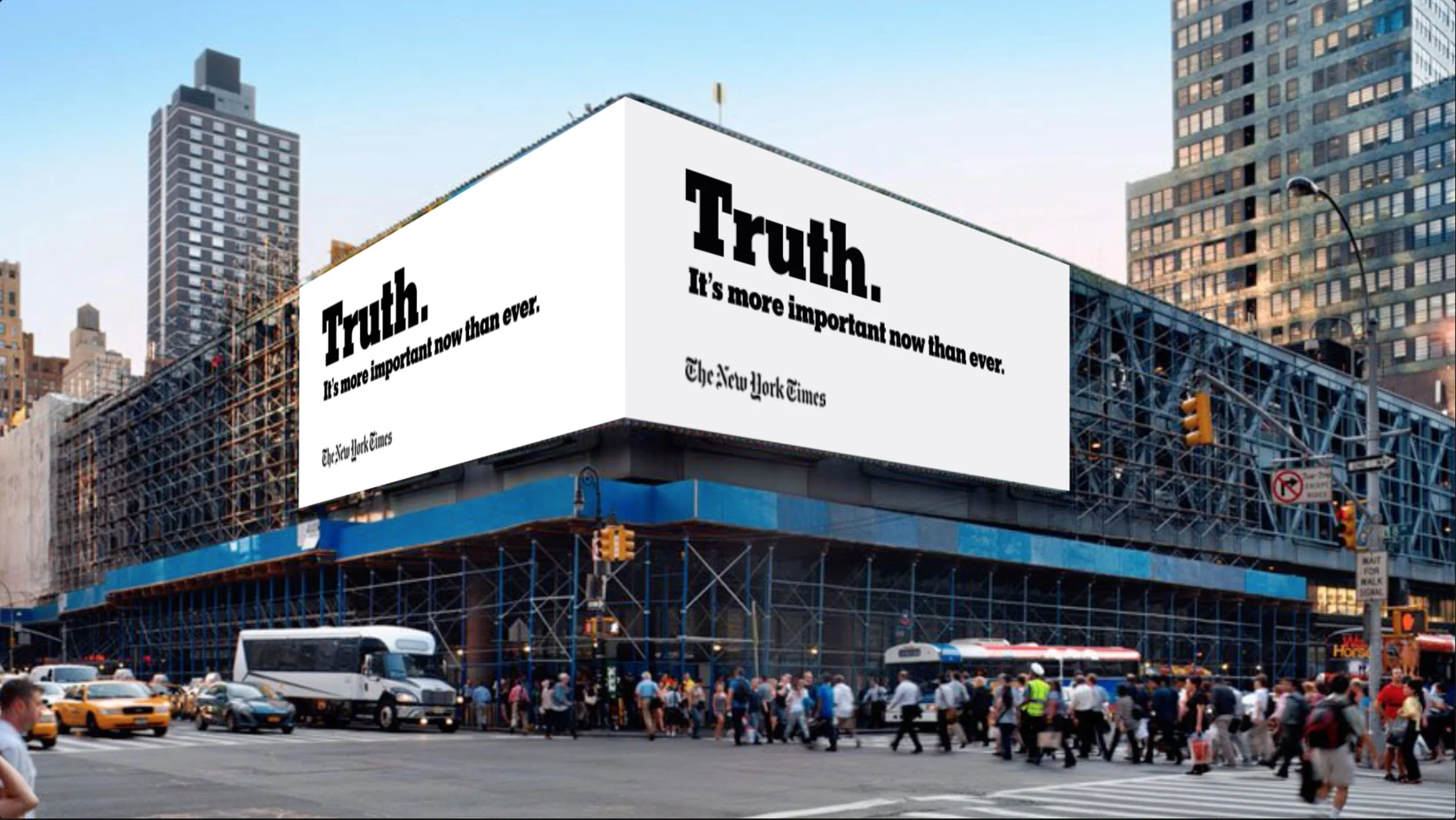
Source: AdAge
The latest alarmist commentary on our "widespread fantasy" came from The Atlantic (alarmists come in red AND blue, you know). Their September cover story "How America Lost Its Mind" is just one of the latest angles of of the debate.
"How widespread is this promiscuous devotion to the untrue?" they ask us mostly liberals in horror.
Well - and please forgive me social media - it doesn't really fucking matter.
Hear me out.
What matters more to you? The words that I say to you? Or what you hear when I say those words? Some may argue that the intention behind the words - that original message - is what is the most important part of communication. Those bitches be wrong. It is the interpretation - the reception of the message - that defines how that message is reacted to and perceived in the real world. That perception, that belief around the message is what people ultimately interact with. To them, that belief IS the message, and that's all there is to it. So in this sense, the "truth" is irrelevant, because all that matters is what is treated as true. The sky might actually be yellow, and yet we've all agreed to call it blue. So now, it's blue.
This mushiness of fact and belief is not new either, we're just exposed to this perceived friction between the two more often. Every time we go online or watch the news, we're told there is a WAR between the two. We must decide!
Except we don't.
Our belief in the value of brands is, for me, strange evidence that this truth vs. fiction story doesn't matter. It doesn't matter because the value is not in the "thing": the triumph of truth over fiction, for example. The value - like a brand's value - isn't based on a single tangible thing or moment, but on the set of beliefs surrounding it. We WANT to pick a side because we believe one side must win! What could it say about us - about me - if the right side doesn't win? Just like we pick iOS or Android, the value is mostly in the perception that goes into picking.
AdAge sums it up nicely for me: